
Week 4 · FinalW
 at Maryland
54–3+51 margin
Pregame 28–29
Game detailsSaturday Index
Loading team intelligenceBringing the latest verified football information into focus.
Big Ten · 2026 · Week 8

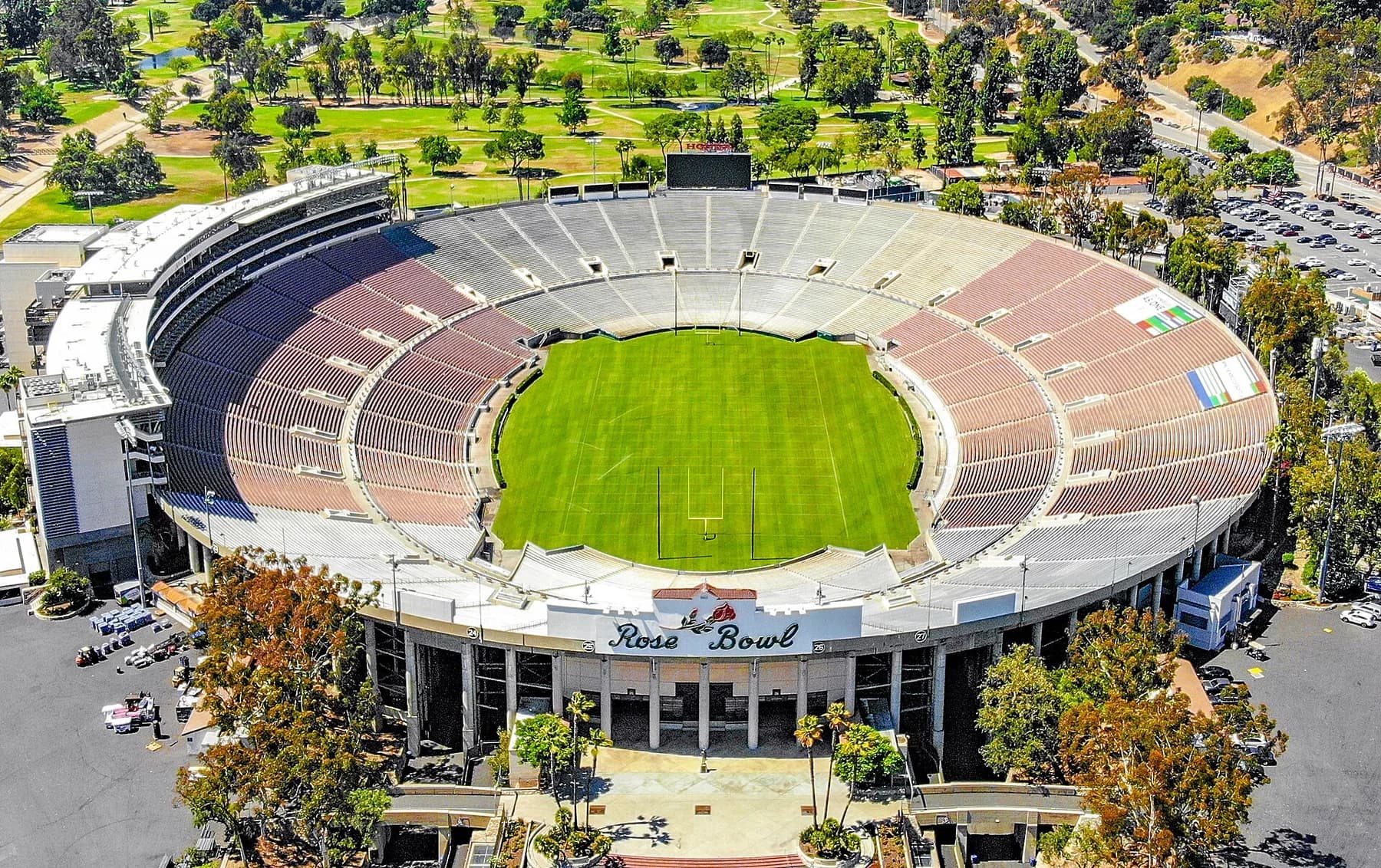
Photo: Ted Eytan · CC BY-SA 2.0 · Cropped for display
Up next · Week 9
Home
Hosting
Saturday, October 31 · Time TBA
The season, taking shape
Final scores show UCLA first. Oldest to newest.
at MarylandPregame 28–29
Game details at Oregon
Pregame 22–35
Game details vs. Wisconsin
Pregame 26–22
Game detailsOriginal full-season forecast
This forecast retains the original probabilities for the full schedule. It does not update with completed results or this week’s forecast.
2026 results
Current record, team efficiency, player production, and verified results from completed games.
Current record
7-07 wins · 0 lossesThrough 7 completed gamesLoading player usage…
2026 season preview
Quarterback continuity gives the Bruins a starting point, but their progress will depend on whether a remade roster can establish a physical style and settle critical roles quickly.
UCLA enters 2026 with an unusual combination of continuity and upheaval. Iamaleava returns after carrying much of the offense last season, but first-year head coach Bob Chesney is installing new systems and standards around a roster transformed by roughly 55 to 56 newcomers, including 43 transfers. That makes the Bruins’ central question larger than any individual addition: Can Chesney turn all that experience and competition into a coherent team quickly enough to matter in the Big Ten?
Original season forecast
The original Big Ten forecast, retained alongside current results.
Big Ten projected standing
#11
4-5 projected · 3.7 expected conference wins · #11 of 18.
Preseason baseline
2025 percentiles retained as preseason context; current results and player production lead this page.
2025 FBS percentile scale · 50 is average
Incoming class
National and conference recruiting ranks, confirmed commitments, and the highest-ranked recruits in this class.
Top committed recruits
UCLA2026 transfer movement
Incoming and outgoing transfer activity, with rated FBS-to-FBS moves below.
Incoming Transfers
UCLAOutgoing Transfers
UCLASeason schedule
Completed games show final results. Upcoming games use this week’s forecast where available; later games retain their published season outlook.
Detailed football intelligence
The full team identity, offense, defense, and supporting evidence.
Team identity
Last season, UCLA tried to lean on the passing game; too many drives still went off schedule.
Why it matters
The run game was UCLA's steadier way to stay ahead of the chains; opponents have to win early fits without handing away play action.
 vs. Michigan State
Pregame 31–18
Game detailsPregame comparisons use preserved published forecasts. Results include wins and losses.
At a glance
Current form leads the outlook.
2026 rates aggregate verified completed-game box scores. EPA is expected points added per play.
| Player | C/ATT | YDS | TD | INT |
|---|---|---|---|---|
| Nico Iamaleava | 72/116 | 982 | 4 | 4 |
| Ty Dieffenbach | 25/39 | 307 | 1 | 1 |
| Player | CAR | YDS | AVG | TD |
|---|---|---|---|---|
| Wayne Knight | 84 | 571 | 6.8 | 11 |
| Anthony Woods | 53 | 347 | 6.5 | 5 |
| Jaivian Thomas | 41 | 200 | 4.9 | 3 |
| Player | REC | YDS | AVG | TD |
|---|---|---|---|---|
| Semaj Morgan | 24 | 313 | 13.0 | 2 |
| Brian Rowe Jr. | 14 | 209 | 14.9 | 0 |
| Aidan Mizell | 6 | 158 | 26.3 | 1 |
| Player | TOT | SOLO | TFL | SACK |
|---|---|---|---|---|
| Jalen Woods | 51 | 28 | 4.5 | 2 |
| Samuel Omosigho | 45 | 32 | 7 | 3 |
| Ta'Shawn James | 33 | 16 | 0.5 | 0.5 |
Saturday, October 24 · Rose Bowl
Saturday, October 17 · Rose Bowl
Saturday, October 10 · Autzen Stadium
Chesney’s spring emphasis on consistency and responding to adversity fit the scale of the job. Dean Kennedy is coordinating an offense expected to adopt the run-oriented approach that powered Chesney’s 2025 James Madison team to 3,381 rushing yards, fifth-most in FBS. Colin Hitschler is coordinating a defense rebuilt heavily through the transfer market. Both coordinators must teach while evaluating, and the speed with which UCLA establishes dependable roles will shape how soon the Bruins can play with a recognizable identity.
Iamaleava is the clearest offensive reference point. He passed for 1,928 yards and 13 touchdowns in 2025 while leading UCLA in both rushing attempts and rushing yards. His mobility remains an advantage, but UCLA should no longer need it to function as the base of the running game. Returning starters Jaivian Thomas and Anthony Woods are joined by Wayne Knight, the James Madison transfer who earned second-team AP All-America honors as an all-purpose player and averaged 6.63 yards per carry on more than 200 attempts last season. A productive rotation would let Kennedy preserve Iamaleava’s improvisation without requiring him to carry the same rushing burden.
That plan depends on the offensive line becoming cohesive. UCLA signed 10 transfer linemen, six with at least 10 FBS starts, giving the staff meaningful experience for a physical transition. Experience alone will not create coordinated protection or movement in the run game, however, and the starting combination was not settled exiting spring. The passing game has its own developmental work. Spring reporting described South Carolina transfer Brian Rowe Jr. as explosive but still learning the playbook, while Michigan transfer Semaj Morgan brought dependable energy to the receiver room. Their connection with Iamaleava could provide the downfield answers needed when defenses commit extra bodies to the run.
The defense is attempting a similar conversion of quantity into function. Nine defensive-line transfers give Hitschler options across a front he described as internally competitive at the end of spring. Oklahoma transfer Sammy Omosigho, who arrived with 36 games of experience, emerged as a visible spring presence. Returning sophomore Scott Taylor offers a different kind of value after playing all 12 games as a freshman. Omosigho’s experience and Taylor’s continuity can help stabilize a unit that otherwise must sort through extensive change, particularly in the front and secondary.
Several consequential roles remain unsettled. UCLA had not publicly established its offensive-line combination, defensive-front rotation or first-team cornerback and safety group by the end of spring. Defensive backs Tao Johnson and Cole Martin are among the options in the remade secondary, but their exact places in the lineup were not defined. Current injury, eligibility and game-day availability also cannot be assumed this far from the season. Those uncertainties do not erase the roster’s potential; they explain why fall cohesion matters more than the number of transfers assembled.
The schedule gives UCLA an early chance to reveal whether that process is working. The Bruins open at California, then host San Diego State and Purdue before traveling to Maryland. That first month should test whether the new line combinations and defensive communication are sturdy enough to travel. The October trip to Oregon is the clearest midseason pressure point, followed by home games against Wisconsin and Michigan State. November brings trips to Minnesota and Michigan before USC visits the Rose Bowl for the finale, creating a demanding finish even though UCLA avoids Ohio State, Penn State, Washington and Iowa.
Ryan Kartje reported that Big Ten media picked UCLA 13th in the conference preseason poll, matching its 2025 finish. That restraint is understandable: quarterback continuity and transfer experience offer possibilities, not proof. Still, Chesney has a workable blueprint. If the line supports a genuine running-back rotation, Iamaleava can become a selective rushing threat rather than the entire ground game. If Omosigho, Taylor and the rebuilt defensive rooms establish order, UCLA can meet its schedule with more than offseason optimism. The Bruins’ season will turn on whether a remade roster becomes a team before its most difficult pressure points arrive.
This preview is based on the linked public reporting and official program records.
Profile high point
Big-play prevention held the profile's highest percentile position.Profile low point
Pressure held the lowest percentile position among the profile's strength measures.




UCLA can lean on the run game when a drive slips off schedule, but front-seven disruption still needs support.
What matters
UCLA's rushing structure ranked in a strong national range last season.
Front-seven disruption is UCLA's biggest concern, and opponents can test it immediately.
Why it matters
Opponents can trust normal protection and make the defense win without steady negative plays; rushing structure has to keep that stress from setting the game plan.
UCLA is at its best when it can lean on the passing game, then let the run game finish drives; fewer possessions make every empty drive more expensive.
What matters
UCLA's pass-leaning structure played at a deliberate pace. The run game finished strong, while the pass game finished bottom-tier.
Inside the team
Open a section for the football detail and supporting numbers.
The down-to-down question that determines whether the offense can keep both the run and pass available.
Opponents have to keep UCLA's run game from turning first down into second-and-manageable.
Why it matters
If UCLA stays on schedule on the ground, the offense keeps more answers available.
The pace, play selection, and methods this offense uses to stay on schedule.
UCLA played at a deliberate pace in 2025.
What matters
UCLA worked with fewer possessions than most teams last season.
UCLA's prior passing record was bottom-tier.
Why it matters
UCLA's offense needs protection, field position, or explosive variance when ordinary dropbacks do not create enough value.
UCLA's prior rushing record was strong.
Why it matters
A sustainable run game keeps UCLA's play action credible and limits obvious passing situations.
UCLA was better at preventing explosive plays than creating them.
Why it matters
The defense can keep a game on schedule, but the offense may need longer drives and more third-down conversions to separate.
How consistently the offense creates manageable situations and the defense prevents them.
UCLA's offense was more consistent down to down than its defense.
Why it matters
UCLA's success rate shows whether it can sustain drives and get stops without relying on sacks, turnovers, or isolated big plays.
Opponent-adjusted EPA identifies the run game as UCLA's stronger offensive unit.
Why it matters
Forcing longer passing situations is the clearest way to move the offense away from its stronger adjusted unit.
Where the defense can create pressure, control the run, and end drives.
UCLA's prior defense was bottom-tier overall, with no clear separation among its main units.
Why it matters
An offense can keep both the run and pass available and test each unit until the defense proves it can win ordinary early downs.
UCLA's available disruption measures ranked near the bottom nationally last season; a charted pressure rate is not available.
Why it matters
Without consistent disruption, UCLA's defense must win more snaps through coverage, leverage, and early-down prevention.
UCLA's sack and disruption results were bottom-tier.
Why it matters
UCLA's disruption can hurry an offense; sacks do more by erasing field position and ending passing downs.
UCLA's prior run-defense results were bottom-tier.
Why it matters
If UCLA's front cannot control early downs, opponents can keep every offensive option open and protect their passing game.