Week 4 · FinalL
 at UTSA
45–59-14 margin
Pregame 22–34
Game detailsSaturday Index
Loading team intelligenceBringing the latest verified football information into focus.
Pac-12 · 2026 · Week 8

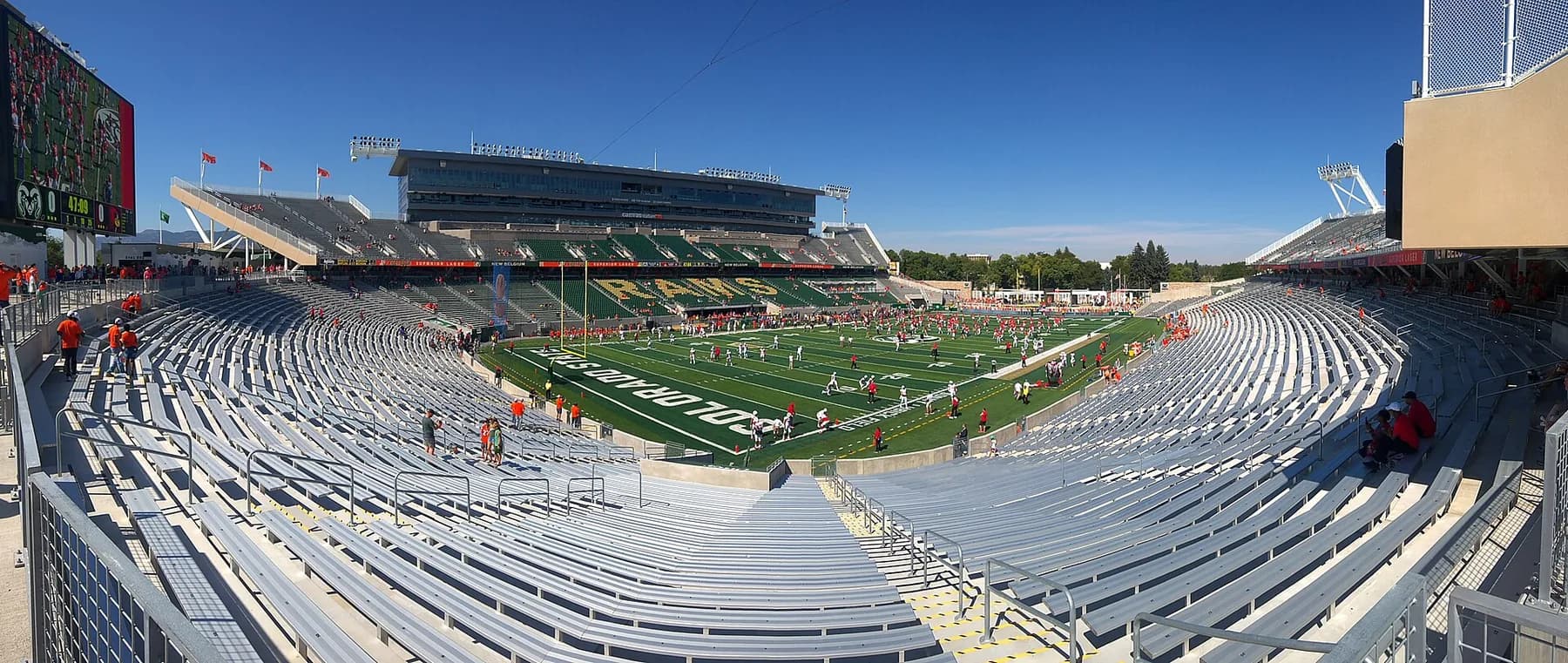
Photo: FarGah1 · CC BY-SA 4.0 · Cropped for display
Up next · Week 9
Away
On the road at
Saturday, October 31 · 3:30 PM EDT
The season, taking shape
Final scores show Colorado State first. Oldest to newest.
at UTSAPregame 22–34
Game details vs. Oregon State
Pregame 28–29
Game details at Texas State
Pregame comparison unavailable
Game detailsOriginal full-season forecast
This forecast retains the original probabilities for the full schedule. It does not update with completed results or this week’s forecast.
2026 results
Current record, team efficiency, player production, and verified results from completed games.
Current record
3-43 wins · 4 lossesThrough 7 completed gamesLoading player usage…
Original season forecast
The original Pac-12 forecast, retained alongside current results.
Pac-12 projected standing
#8
1-6 projected · 1.5 expected conference wins · #8 of 8.
Preseason baseline
2025 percentiles retained as preseason context; current results and player production lead this page.
2025 FBS percentile scale · 50 is average
Incoming class
National and conference recruiting ranks, confirmed commitments, and the highest-ranked recruits in this class.
Top committed recruits
Colorado State2026 transfer movement
Incoming and outgoing transfer activity, with rated FBS-to-FBS moves below.
Incoming Transfers
Colorado StateOutgoing Transfers
Colorado StateSeason schedule
Completed games show final results. Upcoming games use this week’s forecast where available; later games retain their published season outlook.
Detailed football intelligence
The full team identity, offense, defense, and supporting evidence.
Team identity
Last season, Colorado State tried to lean on the passing game; it rarely provided an easy foundation.
Why it matters
The run game was Colorado State's more workable option, not an established edge; defenses can fit it honestly until early-down success forces extra support.
 vs. San Diego State
Pregame 27–30
Game detailsPregame comparisons use preserved published forecasts. Results include wins and losses.
At a glance
Current form leads the outlook.
2026 rates aggregate verified completed-game box scores. EPA is expected points added per play.
| Player | C/ATT | YDS | TD | INT |
|---|---|---|---|---|
| Hauss Hejny | 71/104 | 952 | 13 | 2 |
| Ksaan Farrar | 63/102 | 654 | 3 | 2 |
| Darius Curry | 6/8 | 70 | 1 | 0 |
| Player | CAR | YDS | AVG | TD |
|---|---|---|---|---|
| Jayden Brown | 46 | 432 | 9.4 | 3 |
| Durell Robinson | 81 | 352 | 4.3 | 6 |
| Hauss Hejny | 24 | 213 | 8.9 | 3 |
| Player | REC | YDS | AVG | TD |
|---|---|---|---|---|
| Reginald Vick Jr | 24 | 367 | 15.3 | 4 |
| Terrence Smith Jr. | 21 | 262 | 12.5 | 3 |
| Jackson Harper | 20 | 236 | 11.8 | 2 |
| Player | TOT | SOLO | TFL | SACK |
|---|---|---|---|---|
| Oumar Diomande | 60 | 20 | 2 | 0 |
| TreShawn Moore | 44 | 13 | 1.5 | 1 |
| Antarron Turner | 27 | 10 | 2.5 | 0 |
Saturday, October 24 · Canvas Stadium
Thursday, October 15 · Bobcat Stadium (TX)
Saturday, October 3 · Canvas Stadium
Profile high point
The run game held the profile's highest percentile position.Profile low point
Pressure held the lowest percentile position among the profile's strength measures.


Colorado State did not have one unit that could carry the whole game plan; the run game came closest.
What matters
Even Colorado State's best unit finished near the national middle last season, leaving no proven strength to build around.
Front-seven disruption is Colorado State's biggest concern, and opponents can test it immediately.
Why it matters
Opponents can trust normal protection and make the defense win without steady negative plays; rushing structure has to keep that stress from setting the game plan.
Colorado State is at its best when it can lean on the passing game, then let the run game finish drives; fewer possessions make every empty drive more expensive.
What matters
Colorado State's pass-leaning structure played at a deliberate pace. The run game finished middle-of-the-pack, while the pass game finished weak.
Inside the team
Open a section for the football detail and supporting numbers.
The down-to-down question that determines whether the offense can keep both the run and pass available.
The first question for Colorado State is whether the run game can make defenses commit an extra fit.
What matters
Efficient early runs are the most workable route to keeping play action alive, not an established advantage.
The pace, play selection, and methods this offense uses to stay on schedule.
Colorado State played at a deliberate pace in 2025.
What matters
Colorado State worked with fewer possessions than most teams last season.
Colorado State's prior passing record was weak.
Why it matters
Colorado State's offense needs protection, field position, or explosive variance when ordinary dropbacks do not create enough value.
Colorado State's prior rushing record was middle-of-the-pack.
Why it matters
When Colorado State's run game cannot stay on schedule, protection and passing-down execution carry more of the offense.
Colorado State's explosive-play results were mixed rather than a defining edge.
Why it matters
A big play can still flip a possession, but last season's results do not make explosiveness something this team can rely on.
How consistently the offense creates manageable situations and the defense prevents them.
Colorado State's offense was more consistent down to down than its defense.
Why it matters
Colorado State's success rate shows whether it can sustain drives and get stops without relying on sacks, turnovers, or isolated big plays.
Opponent-adjusted EPA identifies the pass game as Colorado State's stronger offensive unit.
Why it matters
If an opponent removes the first passing answer, the run game's lower adjusted value becomes the key counter to test.
Where the defense can create pressure, control the run, and end drives.
Colorado State's prior defense was bottom-tier overall, with no clear separation among its main units.
Why it matters
An offense can keep both the run and pass available and test each unit until the defense proves it can win ordinary early downs.
Colorado State's available disruption measures ranked near the bottom nationally last season; a charted pressure rate is not available.
Colorado State's sack and disruption results were bottom-tier.
Why it matters
Colorado State's disruption can hurry an offense; sacks do more by erasing field position and ending passing downs.
Why it matters
If Colorado State's front cannot control early downs, opponents can keep every offensive option open and protect their passing game.